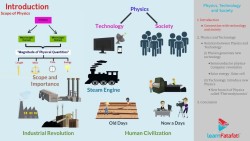
CBSE Class 11 Physics video course for IIT-JEE and NEET exam preparation by LearnFatafat.com
Full class 11 and class 12 Physics course is available on https://learnfatafat.com/cbse-class-xi/
CBSE Class 11 Physics Syllabus -
Chapter 1 Physical World
Chapter 2 Units and Measurement
Chapter 3 Motion in a Straight Line
Chapter 4 Motion in a Plane
Chapter 5 Laws of Motion
Chapter 6 Work, Energy and Power
Chapter 7 System of Particles and Rotational Motion
Chapter 8 Gravitation
Chapter 9 Mechanical Properties of Solids
Chapter 10 Mechanical Properties of Fluids
Chapter 11 Thermal Properties of Matter
Chapter 12 Thermodynamics
Chapter 13 Kinetic Theory
Chapter 14 Oscillations
Chapter 15 Waves
More
0 /10
0 people rated
CBSE Class 11 Physics
2026
R
3 h 2 m
الهند
الفيزياء
CBSE Class 11 Physics video course for IIT-JEE and NEET exam preparation by LearnFatafat.com
Full class 11 and class 12 Physics course is available on https://learnfatafat.com/cbse-class-xi/
CBSE Class 11 Physics Syllabus -
Chapter 1 Physical World
Chapter 2 Units and Measurement
Chapter 3 Motion in a Straight Line
Chapter 4 Motion in a Plane
Chapter 5 Laws of Motion
Chapter 6 Work, Energy and Power
Chapter 7 System of Particles and Rotational Motion
Chapter 8 Gravitation
Chapter 9 Mechanical Properties of Solids
Chapter 10 Mechanical Properties of Fluids
Chapter 11 Thermal Properties of Matter
Chapter 12 Thermodynamics
Chapter 13 Kinetic Theory
Chapter 14 Oscillations
Chapter 15 Waves
More
0 /10
0 people rated
شاهد أونلاين
شاهد في التطبيق
Watch on TV
الحلقات
أفضل الممثلين
تقييمات المستخدمين
الحلقات
أفضل الممثلين
تقييمات المستخدمين
الحلقات
film
lklk
Netflix
Plex
تقييمات المستخدمين
Milka
30/10/2026 13:54
Laws of Motion Class 11 Physics - The Law Of Inertia
@king_sira
30/10/2026 13:54
Laws of Motion Class 11 Physics - The Law Of Inertia
samrawit getenet
30/10/2026 13:54
Motion in a Straight Line Class 11 Physics - Motion In A Plane - Acceleration
Maki Nthethe
30/10/2026 13:54
Motion in a Straight Line Class 11 Physics - Motion In A Plane - Acceleration
Asif Patel
30/10/2026 13:54
Units and Measurements - Significant Figures
Measurement of any physical quantity gives out a number. Suppose, measurement of time period of simple pendulum is 02.71 s. If you carefully look at this number then you will come to know that the information is reliably conveyed by last three digits only and the first digit is unnecessary. So, we can say that, there are three significant figures in this number. In simple words, The number of figures, present in any value, which are known with some degree of reliability known as the significant figures.
Rules for determining significant figures,
The change of unit, does not change the number of significant figures.
e.g. 3.561 m has four significant figures. Even if we change the unit i.e. 356.1cm or 3561 mm.still the number of significant figures will be four.
All non-zero digits are significant.
e.g. the number 4587 has four significant figures.
All zeros between the non zero digits are significant.
e.g. 4.05 has three significant fig
Merrygift
30/10/2026 13:54
Units and Measurements - Significant Figures
Measurement of any physical quantity gives out a number. Suppose, measurement of time period of simple pendulum is 02.71 s. If you carefully look at this number then you will come to know that the information is reliably conveyed by last three digits only and the first digit is unnecessary. So, we can say that, there are three significant figures in this number. In simple words, The number of figures, present in any value, which are known with some degree of reliability known as the significant figures.
Rules for determining significant figures,
The change of unit, does not change the number of significant figures.
e.g. 3.561 m has four significant figures. Even if we change the unit i.e. 356.1cm or 3561 mm.still the number of significant figures will be four.
All non-zero digits are significant.
e.g. the number 4587 has four significant figures.
All zeros between the non zero digits are significant.
e.g. 4.05 has three significant fig
lasisielenu
30/10/2026 13:54
Units and Measurement Class 11 Physics - Combination Of Errors Error Of A Sum Or Difference
Consider two physical quantities A and B. The values of these quantities are given as A △A, B△B. where △A and △B are the absolute errors.
Let us find Error of a Sum:
take the third quantity Z such that Z = A + B for which △Z is the resultant error due to sum of errors. Adding the two physical quantities we get,
Z△Z = (A △A) + (B△B)
i.e. Z△Z = (A+B) (△A + △B)
The maximum possible error △Z = △A + △B … (1)
in case of error of a difference: we will subtract the two physical quantities. i.e.
Z △Z = (A △A) - (B△B)
= (A-B) -( △A △B)
= (A-B) - (△A △B) since △B = △B
= (A-B) (△A + △B)
the maximum possible error in Z will be △Z = △A + △B … (2)
Conclusion:
From (1) and (2) we can conclude that, when two quantities are added or subtracted, the resultant absolute error in the final result will be the sum of individual absolute errors of different quantities.
Example:
The temperature is measu
user6922459528856
30/10/2026 13:54
Units and Measurement Class 11 Physics - Combination Of Errors Error Of A Sum Or Difference
Consider two physical quantities A and B. The values of these quantities are given as A △A, B△B. where △A and △B are the absolute errors.
Let us find Error of a Sum:
take the third quantity Z such that Z = A + B for which △Z is the resultant error due to sum of errors. Adding the two physical quantities we get,
Z△Z = (A △A) + (B△B)
i.e. Z△Z = (A+B) (△A + △B)
The maximum possible error △Z = △A + △B … (1)
in case of error of a difference: we will subtract the two physical quantities. i.e.
Z △Z = (A △A) - (B△B)
= (A-B) -( △A △B)
= (A-B) - (△A △B) since △B = △B
= (A-B) (△A + △B)
the maximum possible error in Z will be △Z = △A + △B … (2)
Conclusion:
From (1) and (2) we can conclude that, when two quantities are added or subtracted, the resultant absolute error in the final result will be the sum of individual absolute errors of different quantities.
Example:
The temperature is measu
PUPSALE ®
30/10/2026 13:44
Units and Measurement Class 11 Physics - Absolute Error, Relative Error, Percentage Error Numerical
Question: From the experiment of measuring the time period of simple pendulum, the successive measurements for time period are 2.54s, 2.36s, 2.60s. Find absolute errors, relative error and percentage error.
Answer:
amean=2.54+2.36+2.603 s
= 7.50/3
= 2.50 s
absolute errors
△a1=a1-amean
= △a1=2.54-2.50 s
= △a1=0.04 s
similarly,
△a2=2.36-2.50 s= (-0.14) s
△a3=2.60-2.50 s= 0.10 s
mean absolute error, Δamean= |Δa1|+|Δa2|+ ... + |Δan|n
Δamean= 0.04+ 0.14 + 0.103s= 0.093s = 0.09s
Relative error = Δameanamean=0.092.50=0.03
Percentage Error, δa= Δameanamean 100 %
= 0.092.50100=3%
nathanramos241
30/10/2026 13:44
Units and Measurement Class 11 Physics - Absolute Error, Relative Error, Percentage Error Numerical
Question: From the experiment of measuring the time period of simple pendulum, the successive measurements for time period are 2.54s, 2.36s, 2.60s. Find absolute errors, relative error and percentage error.
Answer:
amean=2.54+2.36+2.603 s
= 7.50/3
= 2.50 s
absolute errors
△a1=a1-amean
= △a1=2.54-2.50 s
= △a1=0.04 s
similarly,
△a2=2.36-2.50 s= (-0.14) s
△a3=2.60-2.50 s= 0.10 s
mean absolute error, Δamean= |Δa1|+|Δa2|+ ... + |Δan|n
Δamean= 0.04+ 0.14 + 0.103s= 0.093s = 0.09s
Relative error = Δameanamean=0.092.50=0.03
Percentage Error, δa= Δameanamean 100 %
= 0.092.50100=3%
Disclaimer: All videos and pictures on MovieBox are from the Internet, and their copyrights belong to the original creators. We only provide webpage services and do not store, record, or upload any content.


 استمتع بأفلام وبرامج بلا حدود
 حمل ما تحب وشاهد بدون إنترنت
 واجهة بسيطة وأداء سلس